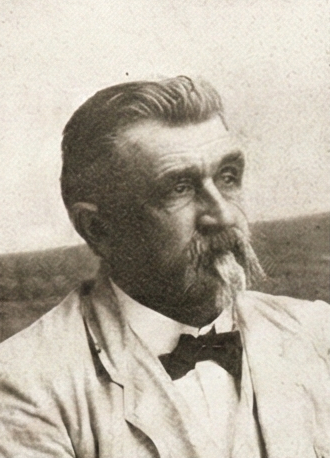
Chapter 1 - Abner Buckner Price and Martha Arnold
On April 11, 1831, when Abner was twenty-six years old, he married Mildred E. King, the daughter of Matthew King and Mildred Bennett. They had two children, William Bennett King Price and Almira Price. Mildred died in 1836, when Abner was thirty-one and his children were three and four years old, respectively.7 Two years later, on March 5, 1838, when Abner was thirty-three, he married Martha Arnold, who was twenty-six. Martha, born in 1812, was the daughter of Lt. John Arnold and Jane Humphries. Abner and Martha had four children of their own, all sons. The first, Martin Luther Price, was born January 7, 1839.8 Later the same year, in June, 1839, Abner’s uncle, Bennett Price, died and bequeathed his tract of the former “Indiantown” plantation to Abner. The following year (May 26, 1840), Abner and Martha’s second son, James Buckner Price, was born. Benjamin Franklin Price was born two years later, on May 6, 1842, and the last son, George Washington Price, was born November 23, 1843.9 Martha raised her four sons in the Baptist Church, to which she introduced the Price family. Martha died of pleurisy at the age of 33 on February 9, 1845. Her eldest son, Martin, was then six and her youngest son, George, was on and a half. Martha was apparently a deeply religious woman. Her obituary stated: “Died on the 9th instant, in King George County, at the residence of Mr. John Arnold, Mrs. Martha Price, wife of Abner B. Price, Stafford County. She died in her 33rd year, leaving four children, the eldest about 6 years old. This excellent woman and Christian was on a visit to her friends, where she was taken with a violent pleurisy, and expired after eight days of patient suffering. 9 Family Tree prepared by Herbert Price. 8 Family Tree prepared by Herbert Price. 7 Family Tree prepared by Herbert Price.
Her heavenly Father visited her with severe illness about twelve months ago, when she felt the necessity of living in closer communion with her Redeemer, and from that time she walked with God, and felt the blessedness of doing so. She said that since that time she had enjoyed the presence of God more than she had ever done, and now, said she, if it is the will of God to take me from this world, I shall enjoy a better day. Her confidence in God was firm and abiding, and her hope of glory bright and triumphant. In various ways and at different times, she expressed her trust in her Saviour, and her love to him. After making several requests of her friends and relatives, she resigned her spirit into the hand of her Redeemer and her God. Let us rejoice that “the pure in hear shall meet again.” If Brother P. Monague’s eye should meet this, he is informed that he is requested to preach her funeral sermon at his next meeting in the neighbourhood, say the Saturday before the first Lord’s day in March.”10 Abner and Martha began to raise their children on the former “Indiantown” plantation that Abner had inherited the year he was married. Then, in 1846, when his youngest son was three years old, Abner’s wife died. The same year that Abner’s wife died, the United States declared war on Mexico. The war resulted in the annexation of the region from Texas to the Pacific. California, the first new state created from the region, prohibited slavery. California upset the balance of power that had existed since the Missouri Compromise of 1820. Under that arrangement, new states had been admitted to the Union in pairs, one “slave” and one “free”. A rough equality had thereby been maintained in the Senate and presidential electoral votes. When California upset the balance in favor of the North, a new “compromise of 1850” was reached, whereby the North agreed to enforce the laws on runaway slaves to the satisfaction of the South. But this new strictness toward fugitive slaves ran against mounting sentiment in the North. 10 Obituary, Religious Herald, in Richmond, on March 6, 1845 (Pg. 3, co. 4 and 5).
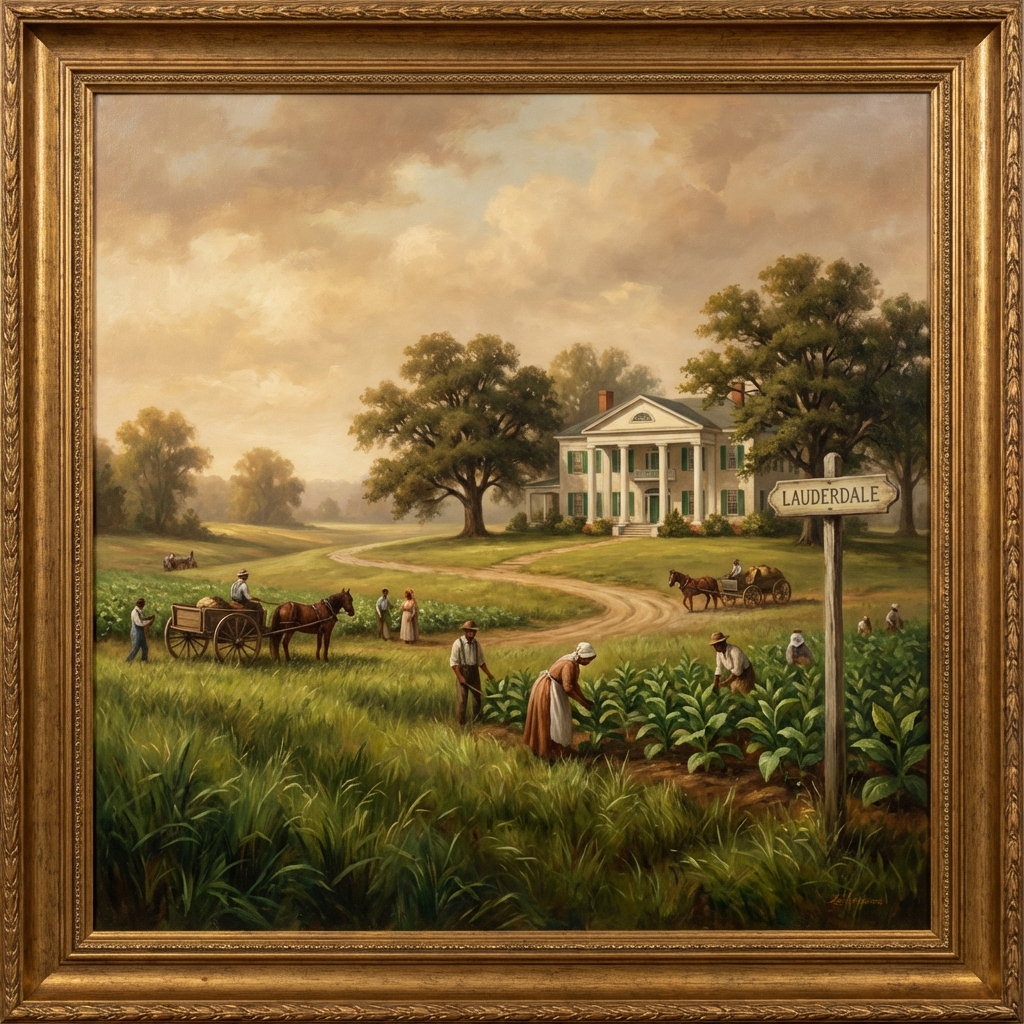
The South was increasingly a minority. Where in 1790, North and South had a roughly equal populations, by 1860, the North had a population of 22 million and the South 9 million, of which 4 million were enslaved blacks. With the increasing population, the northern farm lands of Iowa, Wisconsin, Minnesota and Oregon were likely to become states. This would confirm the predominance of abolitionists in Congress. Southerners discussed annexing Mexico and the West Indies, and forming a great slave state from the Mason Dixon line to Panama. On March 27, 1852, when Abner was forty-seven, his seventy-nine year old father, Thomas, died, leaving the Lauderdale plantation to him. Abner also purchased from the Fitzhughs the 650 acre Belle Isle plantation on Route 218, the next east-west thoroughfare north of Route 206. This brought his plantations to over a thousand acres, and increased his dependence on slave labor. In 1854, Senator Stephen Douglas of Illinois steered a bill through Congress establishing the two new (pro-slavery) territories of Kansas and Nebraska, and applying the principle of popular sovereignty to both. The effect of the Act was confirmed on March 7, 1857, by the U.S. Supreme Court decision in the Dred Scott case, in which the Court held that the U.S. Constitution did not empower Congress to prohibit slavery in the territories. The Kansas-Nebraska Act voided the Missouri Compromise and produced strong protest in the North. This led to the formation of the Republican Party, which opposed any further expansion of slavery. Kansas became a decisive region. The slavery issue caused opponents and supporters of slavery to pour into the territory from both free and slave states and become settlers there. There, they engaged in an armed struggle which continued until 1857 and ended in victory for the anti-slavery settlers.
On June 16, 1856, when Abner was 51 and his youngest son, George, was twelve, Abner remarried.11 His wife, Virginia Phillips, was the 28-year-old daughter of Joseph and Elizabeth Phillips. According to Herbert Price, Jr., the Phillips had lived at Oak Hill (perhaps a plantation), in Maryland. In Virginia, abolitionists were making efforts, similar to those that had been made in the Kansas territory. On October 16, 1859, the abolitionist John Brown rated the federal arsenal at Harpers Ferry, Virginia, just to the northwest, and attempted to promote a general slave uprising. That rate, along with Northern condemnation of the Dred Scott decision, convinced Southerners that their independence within the Union was increasingly at risk. The extension of slavery was the chief issue in the presidential election of 1860. The election of the Republican Party’s Abraham Lincoln in November, as an anti-extension President confirmed the South in its resolve to secede. On December 20, South Carolina passed the “ordinance of succession,” and prepared for war. Early in 1861, Mississippi, Florida, Alabama, Georgia, Louisiana and Texas joined South Carolina. In February, the seceding states sent representatives to a convention in Montgomery, Alabama. There, on February 18, the elected Jefferson Davis, president of the “Confederated States” of America. On March 11, they adopted a constitution similar to that of the United States, but upholding “the institution of negro slavery.” On March 4, 1861, Lincoln was inaugurated as President. In his inaugural address, he proclaimed that the secession was illegal and promise to preserve federal possessions in the South. On April 12, 1861, he attempted to re-supply 11 Marriage Certificate of Abner B. Price, issued by the Department of Health, Commonwealth of Virginia.
Fort Sumter, a federal installation in the harbor at Charleston, South Carolina, and Southern artillery opened fire. On April 15, 1861, the commander of the Union garrison at Fort Sumter surrendered on the same day in Washington, Lincoln called for 75,000 volunteers to fight forces “to powerful to be suppressed by the ordinary course of judicial proceedings.” On the same day, Virginia joined the Confederacy. In May, Arkansas, North Carolina and Tennessee also joined. On April 15, 1861, the date, Virginia joined the Confederacy, Abner and Martha Price’s two oldest sons, Martin and James were 20 and 22-year-old farmers in King George County. Their younger brothers, Benjamin and George, were seventeen and eighteen-year-old students at Comorn, in Gene George County. On April 27, young men from King George County joined together to form “the King George Grays”, which later became Company “K” of the 30th Virginia Infantry Regiment. Krick’s history of the Regiment states: “The King George Grays were described in these early days of the war by an outside observer as ‘the pic of the county.’ The same witness, without acknowledging any incongruity, also noted that they were ‘a wild, dissipated, & noisy set generally.’12 During this period, northern river traffic on the Potomac was vulnerable to Confederate batteries planted on the Virginia shore. For several months, the Confederates try to prevent Federal shipping along the river. On May 22, the civilians of Fredericksburg – particularly “the town belles,” wrote the train down to the river and presented a Confederates play to the Washington Guards and the Fredericksburg Artillery. On May 24, the Confederate capital was moved from Montgomery to Richmond, Virginia. 12 Krick, Robert K., 30th, Virginia Infantry, H.E. Howard Inc. (Lynchburg, Virginia) 1985, from the Virginia Regimental Histories Series, p. 3.
Northern newspapers, the public, and political leaders called for a direct overland march on Richmond and the destruction of the Tredegar Iron Works, The South’s largest munitions factory, there. They believed that the fall of Richmond would demoralize the South and bring the war to a rapid close. Other advisors urged Lincoln that such an assault would be disastrous. Not only did the Army consists largely of untrained volunteers, but in overland attack on Richmond would require crossing difficult terrain. The advised an alternate strategy, based on the expectation of a longer war. They envisioned a well-trained army of 300,000 men invading the Mississippi Valley to cut the Confederacy in half, and an effective naval blockade. At first, in overland march on Richmond was tried. In May, 1861, Federal troops across the Potomac River, captured Alexandria, Virginia, and moved into Northwestern Virginia. On May 20, 1861, during the Federal offensive, the King George Grays enlisted in the Confederate Army. On that day, Abner’s three eldest sons enlisted in the Grays. Martin was 22, and probably enlisted as a Sergeant, since he held that rank in July, 1861. James was six days short of his twenty-first birthday. Benjamin was too weak short of his eighteenth birthday. It was another ten months when, Abner’s youngest son enlisted on March 23, 1862, four months after his eighteenth birthday. On September 17, 1862, at the Battle of Sharpsburg, at Antietam, Benjamin Price was wounded in the leg, unable to return to duty and till five months later, on February 8, 1863. James Price was wounded in the neck, also returning in February, 1863. Several of the Price’s neighbors from King George County, also in Company K, were killed, including Captain Foster and first Lieutenant Baber.
On October 14, Martin Price was promoted to first Lieutenant, and Benjamin Price, while absent due to his leg wound, became Corporal. Martin Price commanded the Company from October 14, 1862 to June, 1863. On you worry a, 1863, James and Benjamin returned to their company. After recovering from the wounds they had suffered at Sharpsburg. Martin Price was absent from his regiment due to illness, and may have returned to King George, from September to December, 1863. In November, 1863, George B. Price was assigned to provost duty in Fredericksburg, where he remained until June, 1864. On April 11, 1864, while the 30th Regiment was in Kinston, General Corse issued a general order to his men around Kinston, deploring the “lawlessness of the troops”, who were straggling…thieving and plundering…” and instituted stern new requirements for camp guards and written passes from high-ranking officers (Krick, p. 47). On the same day, James Buckner Price was transferred to the Confederate Navy, where he remained for the balance of war. From May to June, 1864, marketing Price was absent from the regiment due to. Since George was on provost duty in Fredericksburg from November, 1863 to June, 1864, this left only Benjamin serving with the regiment in the field. On May 6, the Regiment received orders to proceed to Petersburg to counter the threat from Butler. From May 15-17, it engaged in the bloodiest battle of the war (except Sharpsburg) at Drewry’s Bluff. In June, 1864, Martin Price returned to the regiment after his illness and George Price returned from provost duty in Fredericksburg. On June 3, 1864, the regiment participated in the Battle of Cold Harbor, in which Lee repulsed an attack by Grant just north of Richmond, stopping Grant’s advance toward that city.
On June 18, Pickett’s men were caught in a surprise attack by Butler’s Northern troops below Chester and Beauregard was forced to abandon the important line of defenses that ran southward from the James River at the Howlett House to the Appomattox River. The same night, Company F, of the 30th Virginia in the 15th Regiment we captured the works, which Pickett’s division then re-occupied. The 30th Regiment remained in the trenches of the Howlett Line for the next eight months, until February, 1865, with the battles leading up to the surrender at Appomattox Court House in April of that year. Benjamin Price appears to have left the regiment in September, 1864, George in November. Martin was granted a leave of absence on a certificate of disability on November 8, 1864 and was absent without leave at Edge Hill, King George County on January 29, 1864. Since his father’s death fifteen years earlier, Abner Price had operated his farm of over a thousand acres in King George County. His youngest son, George, returned after the war, until a year later, when Abner died on March 29, 1866, at the age of 61.